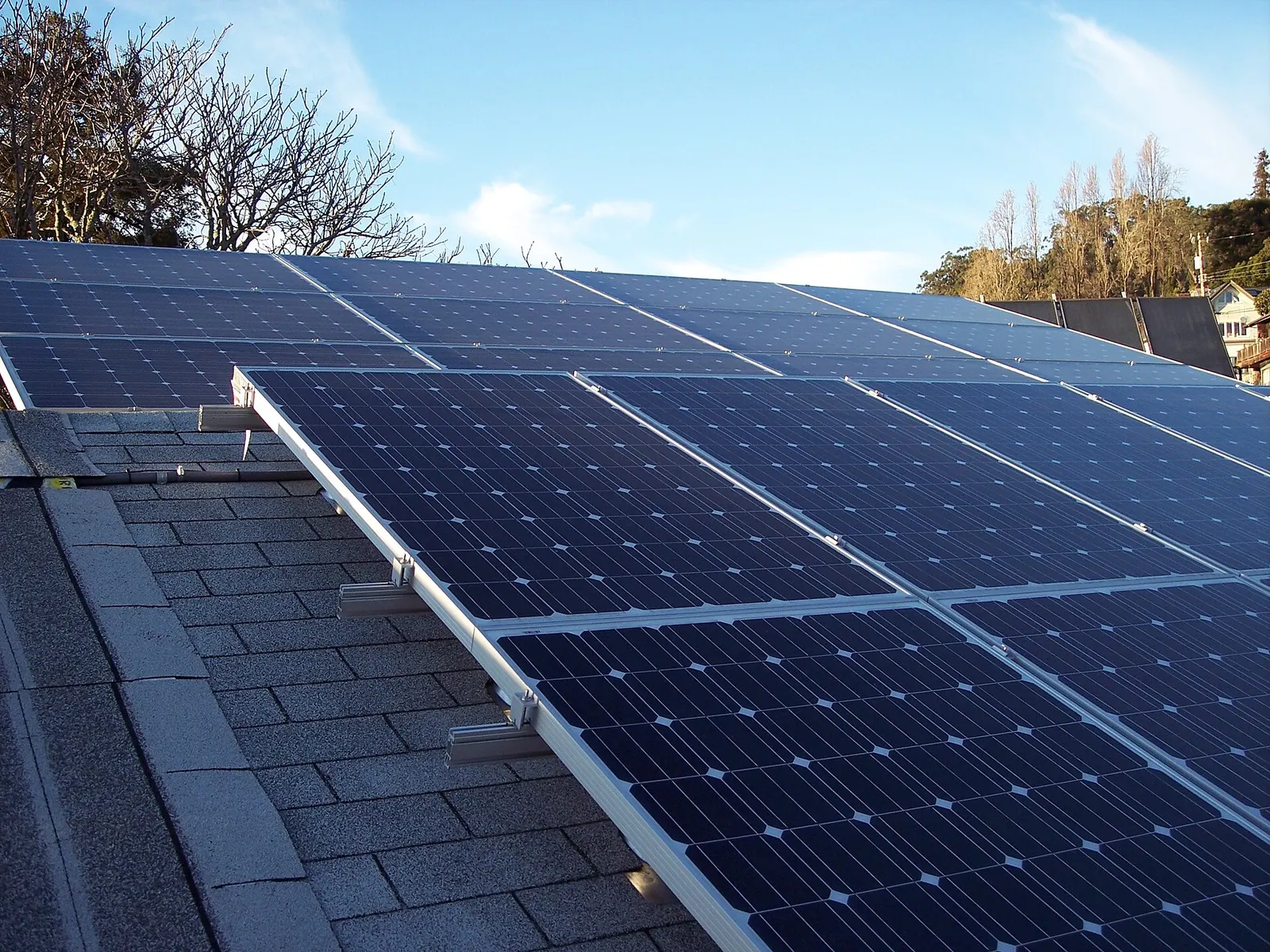
Settle the tree before anyone sizes your system
Before you compare solar installers in Milton, ask one question of every quote: does it put panels on a roof plane that a large tree shades today? If it does, the production estimate depends on a decision the City of Milton makes, not the installer.
Milton's tree removal guidelines require a tree removal permit for any tree 15 inches DBH or larger. DBH means diameter at breast height: the width of the trunk measured at about chest height. A small canopy tree such as a dogwood or redbud needs a permit from 8 inches, and any tree inside a landscape, stream or zoning buffer needs one at any size. The rules come from Milton's Tree Canopy Conservation Ordinance, which has applied since December 1, 2020. They cover parcels inside city limits; the permit section further down shows how to confirm yours is one.
The application asks for your contact details, the tree company, a hand-drawn sketch of where the trees stand, and their species and sizes. You apply through CityView, the city's online permit portal, or to the City Arborist, who replies with the requirements and fees. You may have to plant new trees in place of those removed. How many depends on lot size, zoning and the canopy already on the property, so nobody can promise you a number before the Arborist answers.
Trimming is less clear. The guidelines describe removal, not pruning. If a quote assumes heavy pruning instead of removal, ask the City Arborist about that exact work before the production estimate counts on it.
Here is the order that keeps the plan from resting on a permit nobody has applied for:
- Tree. Measure every trunk that shades the roof, note any tree in a buffer, decide keep, trim or remove, and apply before the layout is final.
- Roof. Inspect the plane the tree has been shading, after the tree decision.
- Mounts. Place mounts and penetrations only on planes that will actually carry panels.
- Size. Fix the panel count and kilowatts once the shade is known.
- Electrical and utility. Size the inverter, check the main panel and file with the utility last.
The U.S. Department of Energy lists nearby trees and their shade among the factors that decide whether a roof suits solar. In Milton the tree also carries a permit, a fee and possibly replanting. That is why it goes first.
Check the roof the tree has been shading
If the tree comes down, the plane beneath it carries the new panels. It is also the plane that has sat under leaves, limbs and shade for years. Ask for it to be inspected after removal, once the tree company has finished working over it, not before. A roof report written while the oak still stands can't show what a dropped limb did during removal.
Under the proposed service, the roof condition assessment would cover:
- the attic and roof deck, checked for soft decking and signs of leaks;
- the age of the shingles and underlayment, and how much life they have left;
- the flashing at valleys, chimneys and vents;
- rafter or truss size and spacing, which decides how the mounts attach;
- photos of each plane, with shade notes by plane;
- limb damage, trapped debris or damp areas near the tree line.
Use the report to choose one of three paths, each priced on its own line: install on the current roof, repair the panel area first, or replace the roof first. Think hardest when the shingles have only a few years left. Panels installed now would have to come off and go back on when the roof is replaced, and someone has to pay for that labor.
If you keep the tree, the shaded plane may get no panels at all. Ask for that in writing, plus a price for future removal and reinstall on the planes that do get panels, or the words "not included". Either answer lets you plan. A blank line leaves the cost for later.
Decide who owns each penetration and its flashing
When panels are bolted to a shingle roof, each hole driven through the roof into the rafters is a penetration. The flashing is the formed metal or composite piece that sits under the shingles around the bolt and sheds water past it. The underlayment is the water-resistant layer under the shingles that catches what gets past the surface.
When roof and solar are handled by different firms, a leak at a mount can leave each pointing at the other. On a Milton lot there is one more timing question: the plane under a tree waiting for a city permit. Ask for one named party on each line:
| Item | Question to settle | What a clear answer looks like |
|---|---|---|
| Mount type | Flashed bolted mounts, or a rail-less system? | Named type, and why it suits your roof |
| Penetrations | How many, and on which planes? | A count and a marked roof plan |
| Plane under a tree awaiting a permit | Will any hole go into it before the city approves removal? | None until the permit is issued and the plane is inspected |
| Flashing | Who installs it, and to what spec? | One named installer and a sealant spec |
| Underlayment patches | Who repairs the underlayment at each hole? | One named installer |
| Leaks at a mount | Who answers the call? | One named party, with the period it covers |
| Reroofing later | Who removes and reinstalls the panels, at what price? | A price, or "not included" |
Milton enforces the 2024 International Residential Code (IRC) for houses and the 2023 National Electrical Code (NEC) for wiring, so the drawings should follow those editions. Keep roof lines and solar lines separate on the quote. If flashing and underlayment work is folded into one "installation" figure, you can't tell what the roof work costs or who stands behind it.
Read the name on your bill: Sawnee EMC or Georgia Power
Two utilities serve Milton, and which one you have depends on the address. Milton's City Council approved a Sawnee EMC service agreement for the city's Fire Station 42, so the co-op's territory reaches inside the city; Georgia Power serves other Milton addresses. No public address-by-address boundary map was available when this page was checked, so the name on your electric bill is the reliable answer. It sets what your exported power is worth.
Four terms first:
- kW DC is the panels' rated output. kW AC is what the inverter delivers to your house. Quotes should show both.
- Retail rate is what you pay per kilowatt-hour (kWh) you buy. Export credit is what the utility pays for each kWh you send back, and with both Milton utilities it is far below retail.
- Instantaneous netting means solar power used in your home at the moment it is made offsets what you would have bought. Whatever leaves the house at that moment is credited at the export rate.
- PTO (Permission to Operate) is the utility's written go-ahead to switch the system on.
| Utility | 2026 export credit | Basis | Confirm with |
|---|---|---|---|
| Georgia Power | 7.22¢ per kWh (3.2188¢ avoided-cost rate + 4¢ adder) | Utility's rooftop solar FAQ | Georgia Power |
| Sawnee EMC | 3.79¢ per kWh since May 1, 2026 (was 3.48¢) | As reported by EcoGen | Sawnee EMC, before you sign |
On a Georgia Power bill, the Georgia Power rooftop solar FAQ is the source for the 2026 credit in the table. Instantaneous netting is open for now, first come, first served, until a capacity cap is reached. Residential systems must be 10 kW AC or smaller. The interconnection fee appears on your bill after completion; EcoGen reports it as $100. The PTO letter follows a witness test and meter reprogramming, and covers only the original customer and equipment, so later changes need a new application.
On a Sawnee bill, exports are worth about half as much: 3.79¢ per kWh in 2026, as reported by EcoGen's Georgia solar incentives page, counted as power leaves the home for systems connected since January 2, 2024. EcoGen also reports that Sawnee keeps the renewable energy credits (certificates recording your solar generation) and may change the rate. Sawnee's own site couldn't be reached when this page was checked in November 2026, so confirm the rate with the co-op before you sign.
This matters more in Milton than the table suggests. The panels you gain by removing a tree are extra panels, and extra output is the share most likely to leave the house. It earns most when it is used at home and least when it is exported, especially on a Sawnee bill. A quote that adds panels should state the export share it assumes, at which utility's rate and for which year, since export rates can change from one year to the next.
What one oak is worth: an illustrative calculation
Removing a tree for more panels trades a permit, a removal bill and maybe replanting for more production. Here is how to price that.
Illustrative example: the oak over the rear roof. A Milton home's quote proposes 7.2 kW DC (18 panels of 400 watts) on the front and west planes. If a 24-inch DBH oak shading the rear plane comes down, 6 more panels (2.4 kW DC) fit there, for 9.6 kW DC. Both are scopes inside one written plan; the tree is a line item. A 24-inch oak is over Milton's 15-inch threshold, so removal needs a city tree removal permit, and the City Arborist may require replanting.
- Added cost of the 6 panels (State benchmark): 2,400 W × $2.78 per watt = $6,672, before tree removal, replanting and any roof work on that plane.
- Added yearly output (Illustrative calculation): 2.4 kW × 1,419 kWh per kW per year (EcoGen's Georgia production factor) ≈ 3,406 kWh a year, if the plane is unshaded after removal.
- Worth per year if all of it is exported (Illustrative calculation, 2026 credits): Georgia Power at 7.22¢ ≈ $246; Sawnee EMC at 3.79¢ ≈ $129.
- Worth per year if all of it is used at home (Illustrative calculation): at about 15.0¢ per kWh, EcoGen's Georgia Power average including riders, ≈ $511.
- Simple years to recover the $6,672, tree costs left out (Illustrative calculation): about 27 years on Georgia Power if all exported; about 52 years on Sawnee if all exported; about 13 years if all used at home.
The $2.78 figure is EcoGen's Solar Cost Index for Georgia, September 2026 Edition, prices as of September 25, 2026. As the EcoGen Solar Cost Index methodology explains, it is a modeled installed price before incentives, a state benchmark and not a quote for your home. The production factor is a state value too; a real estimate must model your roof and the shade the remaining trees still cast. On a Sawnee bill, use your own bill's retail rate for the 15.0¢ line.
How to use it:
- The tree is worth removing for solar mainly when the extra output will be used in the house. A real home lands somewhere between the all-exported and all-used lines.
- On a Sawnee bill the case is weakest unless your daytime use is high.
- Add the removal bill, any replanting and the roof work on that plane to the $6,672 before you compare payback.
- Ask for both scopes on one quote, each with its assumed export share.
Fix the panel count before the utility filing
The electrical scope comes last because it depends on how many panels the roof will carry, and in Milton that depends on the tree. Once the count is set, the proposed service would put these in the electrical scope: the inverter type and its AC rating, a check of whether your main panel can take the solar connection, the disconnect, the conduit route, and the electrical contractor doing the work with their Georgia license number. Georgia's consumer office has said the electrical side of a solar install needs a licensed electrical contractor and that there is no separate solar license, so that number is the one to ask for.
Timing is the Milton trap. Say the tree permit is still pending when the installer is ready to file. If the system goes in at 7.2 kW DC now and the six rear-plane panels are added after the oak comes down, that is a change to the system. On Georgia Power, the PTO covers only the original equipment, so a change needs a new interconnection application. The added work would likely need its own CityView permit as well; ask the permit desk. Either way you would pay for a second round of paperwork, inspection and waiting.
So pick one of two paths in writing:
- Wait for the City Arborist's answer, then file once for the final size.
- File now for the smaller system and accept a second application later, with its cost on the quote as its own line.
If you choose the 9.6 kW DC scope on a Georgia Power bill, ask for the inverter's AC rating in writing so you can see it stays within the 10 kW AC residential limit. On a Sawnee bill, ask the co-op how it handles a system that grows after PTO; that answer wasn't available when this page was checked.
Confirm the parcel is in Milton, then the permit route
Before any of the Milton rules apply, make sure the City of Milton is the right permit office. A Milton mailing address isn't proof. City Hall uses ZIP code 30004, but a ZIP code is a postal route, not a city boundary, so check the parcel, not the ZIP. If it turns out to sit inside Alpharetta city limits, the Alpharetta page covers that route.
The firm answer is a Zoning Certification Letter. You request it in CityView with the property address and Tax Parcel ID, and it costs $30, per Milton's zoning office. For a parcel near the city line in north Fulton County, that letter is cheap insurance against applying to the wrong office.
Then Milton's Building division takes over. Community Development issues permits for all construction in the city, every building application goes through CityView, and inspections are scheduled there too. Besides the 2023 NEC and 2024 IRC, the city enforces the 2024 International Building Code and the 2015 International Energy Conservation Code, with Georgia amendments.
The city's building forms list residential checklists for pools, decks, additions and new homes, but no rooftop solar checklist. Requirements can exist without a published checklist, so:
- Ask the permit desk what a rooftop solar submittal needs, and get the answer in writing.
- Ask the installer who files in CityView and whose name appears as the applicant.
- Ask how the tree permit, the roof work and the electrical permit fit together, and in what order the inspections fall.
If your home is in a subdivision, read the covenants and ask the homeowners' association for written approval before the permit goes in. If the property is a designated historic site, ask Milton's planning staff first.
What the proposed service would put in writing
Most pages that turned up for this search in November 2026 were directories: enter a ZIP code and wait for someone to contact you. The proposed service would hand you documents instead, each naming who does what on your Milton property.
Proposed service: written deliverables
- Roof condition report. Remaining life of the shingles and underlayment, repair or replace-first recommendation, and photos of each plane, including the one under the tree.
- Roof-first decision sheet. The three roof paths priced separately, with the tree as its own line: permit status, removal, any replanting the City Arborist sets.
- Penetration and flashing responsibility sheet. Mount type, penetration count and location, and a named party for flashing, underlayment, leaks at a mount, and future removal and reinstall.
- Electrical scope. Marked layout with kW DC and kW AC, inverter type, main-panel check, disconnect and conduit route, the electrical contractor doing the work and their Georgia license number, and a panel-upgrade line if one is needed.
- Milton permit plan. The parcel check, the CityView applicant, the documents the permit desk asked for, and the inspection steps.
- Utility handoff sheet. Sawnee EMC or Georgia Power from your bill, who files the application, the export credit and year used in the savings estimate, and the PTO milestone.
- Closeout pack. Permit number, inspection result, the PTO letter and as-built photos of every penetration.
Before the visit, the proposed intake would ask for a recent electric bill, 12 months of usage, the roof's age or last roofing invoice, any roof warranty, HOA covenants and the parcel address. The quote would separate roof, solar equipment, electrical, and permit and utility lines, with roof repair, a main-panel upgrade, a critter guard and a locked reinstall price as optional lines.
Coverage for Milton is proposed and not yet confirmed. The homepage describes the full proposed service.
Check the price: solar-only dollars per watt
Divide the solar part of a quote by the system's DC watts. That gives dollars per watt ($/W), which lets you compare quotes of different sizes, and compare a quote with EcoGen's State benchmark. On a wooded Milton lot, the usual mistake is dividing the whole quote. Roof repair and tree removal are real costs, but they aren't solar equipment.
| Line (Illustrative calculation) | Amount |
|---|---|
| Whole quote, 9.6 kW DC | $33,500 |
| Less rear-plane roof repair | −$4,800 |
| Less tree removal | −$1,900 |
| Solar-only price | $26,800 |
| Solar-only ÷ 9,600 W | $2.79/W |
| Whole quote ÷ 9,600 W | $3.49/W |
| EcoGen State benchmark (September 2026 Edition) | $2.78/W |
The dollar lines are invented to show the method, not prices from any installer.
Divided whole, the quote looks about 71 cents a watt above the benchmark. Split out, it sits within a cent. That doesn't prove the quote is good; it tells you the solar part is in range before you judge the roof and tree lines on their own. Use the quote's DC watts and say so when you compare, because EcoGen doesn't state whether its benchmark is per DC or AC watt.
Incentives in 2026
Take any federal tax credit out of the payback math for a system you own. The IRS says the residential clean energy credit (Section 25D) is not allowed for expenditures made after December 31, 2025, and the expenditure counts as made when installation is completed. A system finished in 2026 gets no federal residential credit.
Georgia has no state solar tax credit or rebate for home systems, according to EcoGen. If a quote still shows a 26% or 30% federal credit, ask for the savings redone without it.
Questions to ask before you sign in Milton
Take these to every installer. The quote checklist on this site follows the same order.
Tree and parcel
- Does the layout depend on removing or trimming a tree? If it is 15 inches DBH or more (8 for a dogwood or redbud, any size in a buffer), has the permit been applied for, and what did the City Arborist require?
- Has the parcel been confirmed as City of Milton, with the $30 Zoning Certification Letter if there's any doubt?
Roof and mounts
- How much life is left in the shingles and underlayment on each plane that gets panels?
- Was the plane under the tree inspected after removal, and will it stay free of penetrations until the permit is issued?
- Which mount type, how many penetrations, and who is named for flashing, underlayment and leaks at a mount?
- What does removal and reinstall cost when the roof needs replacing, or is it "not included"?
Permit and electrical
- Who files in CityView, and whose name is on the application?
- Who does the electrical work, and what is their Georgia license number?
- Does the main panel need an upgrade, and is that a separate line?
- If the tree permit is still pending, will the system be filed once at its final size, or will adding panels later need a second application, and what would that cost?
Utility and savings
- Is the estimate built for Sawnee EMC or Georgia Power, as named on your bill?
- Which export credit, and which year's rate, does it use?
- What share of the new output does it assume you export?
- Does the AC rating stay within Georgia Power's 10 kW AC residential limit, if you're on Georgia Power?
- Will the system stay off until the PTO letter arrives?
Price
- What is the solar-only price divided by DC watts, with roof and tree lines removed?
- Is any federal tax credit counted in the payback?
- If you're in a subdivision, has the HOA approved the plan in writing?
Ask for the answers in writing and keep them with the quote. If an installer can't answer the tree, parcel and utility questions, the quote wasn't built for your Milton property.